
How to Unlock Hidden Secrets to Affordable Homeschooling

How to Unlock Hidden Secrets to Affordable Homeschooling

                                                            Reading Time: 4 min 21 sec

You are interested in homeschooling but one of the huge hurdles is the budget. Last time you checked, you are not Bill Gates, and you have kids that are determined to eat you out of the house.


In this day and age where the majority of households are dual-income, you wonder how on earth anyone can afford to homeschool? When you think about the potential cost of curriculum, let alone all the co-ops, field trips, and activities, your mind begins to explode. The only thing you can come up with is that homeschooling families have to be secretly rich.  


I am here to tell you that no, not all homeschoolers are rich, not by long shot. They are just normal families with mortgages, kids needing braces, and spending their extra money buying diapers in bulk.  The difference is that they made a huge decision to adjust their way of life in order to meet their family’s values.  


It can feel overwhelming when you begin a new journey, especially when finances are involved. Unlike public school, the US government does not offer any assistance for homeschoolers in the form of tax breaks etc.  You are responsible to cover the cost of your child’s education.


It is hard to make life adjustments if you do not know your end goal. Have you sat down and asked yourself (or with your spouse) what are our values as a family? And then follow that up with asking the question does homeschooling match up our vision and values for the future of our family?


So how do you do it?  How do you homeschool on a typically one income budget?


 1. Shop Smart

2. The Local Mom Scoop


3. Free Curriculum 


4. Utilize Free Trial Offers

1. Shop Smart 

You can always get good deals on school supplies in August, but what about in freezing cold of February?  The Dollar store is my go-to resource for all school supplies, art supplies..chocolate…that you use all the time.  I don’t know about you, but we always have a shortage of drawing paper.  What would cost four dollars or more somewhere else is a steal at the dollar store.  

There is a whole section just dedicated to teacher and education supplies.  It is full of blow globes, clocks, workbooks, flashcards, and games. You never know what you are going to find, so I make sure to check out my local dollar store prior to making a purchase somewhere else.  With the amount of school and craft supplies my kids go through on a daily basis, I have saved the fortune. Yay!


Here are some of my favorite finds:

  1. Activity Books (Math, Language Arts, Spelling etc.)
  2. Acrylic Paint
  3. Drawing Paper
  4. Handwriting Paper
  5. Pencils/Pens
  6. Puzzles


2. The Local Mom Scoop

There can be a wealth of free or low-cost classes and field trips if you know where to look in your town.  Local mom websites that list upcoming events in your town are invaluable to homeschooling affordably.


 You can find them by searching for free activities for kids or by also looking for a local kid activity magazine located in the FREE magazine section at your local grocery store (typically by the door).  This is my #1 Resource for finding AMAZING free or cheap activities to do with my kids.


Second, search for local homeschooling Facebook groups. Join the main homeschooling group for your area and then one or two subgroups that match or have a similar teaching philosophy to yours.  Those groups are a great resource for letting you know of upcoming homeschooling events in your area.  


Third, check your local performing arts websites for field trip opportunities.


Here are some low-cost field trip ideas to check out locally.

  •  Museums– Free Art Classes, Art History, Science Classes
  • Performing Arts– Free Symphonies, ballets, classes
  • Zoo– Free Days
  • Science Center– Free Science classes
  • Historical Landmarks
  • State Parks– Nature centers, classes,
  • Places of business– Factory Tours, etc.

 

3. Free Curriculum 

I HATE spending hundreds of dollars on curriculum that I don’t end up using (frankly I hate spending money, period).  I am so thankful that I discovered that you can borrow curriculum for FREE at the library. You heard me! I know Christmas just came early, right?!  (See this article for step by step instructions)


They have a number of not only mainstream textbooks, streaming documentaries, and free software (ROSETTA STONE, PEOPLE), that are available. If your library doesn’t have the resource, they can request it from a web of libraries all over the US.


I have found not only found reading, grammar, logic, math, science, and religion books but have saved hundreds if not thousands of dollars. Woohoo!


 Here are just some examples:

  1. Living Books for every subject
  2. Audio Books– Music, Languages, Math, Social Studies etc. on CDs
  3. Curriculum– Textbooks, and Software


*Check out this post for more info and step by step instructions to request your free curriculum.


4. Utilize Free Trial Offers

There are some amazing resources that you can check out for FREE (many with zero credit card required).  Whatever topic you are diving into, check to see if there is a free trial for a resource you could use to supplement your curriculum. These resources could be apps, streaming video, audiobooks or classes, etc.


This is a HUGE resource because it SAVES YOU MAJOR MONEY! No one wants to buy the latest and greatest resource only to have it sit on a shelf (waiting to be returned) because it doesn’t fit the needs of your family.


I have personally tried out free trial offers to art, social studies, math, reading, piano, language programs. Sometimes the trials are temporary and only happen a couple of times a year, and others are a permanent part of their marketing.  


You can find such resources by a quick Google Search and by following your favorite homeschool bloggers (insert shameless plug* You can hear about more awesome homeschool resources and follow Most Important Work below* ) If you find a resource that you are interested in, sign up for their email list, be patient, and a couple of times a year, they will send out free (or close to free) specials.


Are you wondering HOW do you actually get started homeschooling? Join our community of moms who want to invest in the lives of their children through homeschooling.  I also created a 10 Tips to Finding Excellent Curriculum form (grab it below) to help you on your journey. 

You Got this Mom!


What about you? What is your number one frustration when it comes to figuring out this homeschooling adventure?  Leave a comment, and don’t forget to follow Most Important Work on Pinterest!

How to Overcome the Top 10 Fears to Homeschooling

How to Overcome the Top 10 Fears to Homeschooling


                                                       Reading Time: 5 min 32 seconds


What scares you when it comes to homeschooling? Is it the fear of failing? The cost? Or something else? When you start to entertain the possibility of homeschooling, it can be a daunting process. You don’t know what you don’t know, and that can be overwhelming. 


Before we talk about breaking down the top ten fears of homeschooling, we need to take a look at the foundation of homeschooling, which are your family’s values.


Instead of focusing on your fears, ask yourself the question: What are my family’s values? What life do I imagine for my child? 


Your values are CRUCIAL to not only deciding whether or not to homeschool, but how and what you teach, and your overall learning environment.  Family values serve as building blocks to everything else.


I would encourage you to sit down with your spouse or a friend and write out your family’s values.  They don’t have to lengthy or eloquent.  


They can be as simple as: 

  1. A value of close family relationships
  2. A value of encouraging a strong relationship with God.
  3. A value of fostering a love of learning
  4. A value of taking initiative, problem-solving, and out of the box thinking

Once you settle on your key values, you can begin to address your fears of homeschooling.


Disclaimer: Homeschooling is not for everyone. You must decide what type of education is best for your family.


 1. I Am Not Trained As A Teacher

2. I Would Go Crazy Being At Home        With The Kids All Day

3. I would Mess Them Up

4. What If I Failed

5. I Don’t Have Enough Patience 

6. I Couldn’t Leave My Career

7. I Hated School

8. I Could Never Afford it 

9. It’s Just Too Overwhelming

10. I’m Not Organized Enough

1. I Am Not Trained As A Teacher

Rest assured you do not need to be trained as a teacher to be qualified to teach your child. You have been teaching your child since they were born. You taught them how to walk, how to talk, their ABC’s, and how to share (okay, that’s an ongoing learning experience). You don’t need to start anything new, you just need to continue loving them, fostering relationships and a love of learning in your home.  

2. I would go Crazy being at Home with Just the Kids all Day

Are you stuck at home now all the time? Unless you have an infant most likely, you are taking advantage of playdates, Storytime at your local library, and trips to the park.   Nothing changes when you homeschool. You don’t cloister inside. You take advantage of the many opportunities homeschoolers have to learn, grow and explore the world.


Yes, as with any job, there are tough days, or days when you can’t get outside, and that’s when you continue to employ self-care practices.  Throughout the day you take a couple of minutes to yourself, when your spouse comes home you go take a walk, go shopping, read a book or go out with friends. Taking care of your overall mental, emotional, physical and spiritual health is important no matter what job you hold.


3. I would Mess Them Up

Seriously, who knows and loves your child more than you? Who wants them to succeed more than you? We all want good things for our kids. We know their strengths and weaknesses, and unlike a teacher who has to manage twenty needs at once, we can tailor our teaching style to our child’s specific needs. You are the most highly motivated teacher out there.


4. What If I Failed

 You need to know that just like traditionally educated children your child will have gaps in their education.  It’s not failure on your part, it’s just life. You could teach everything there is to teach and some of it will go in one ear and out the other.


In homeschooling, you are not teaching just to get through the curriculum, you are fostering a love of learning in your child. If you focus on encouraging curiosity, exploration, and initiative, your child will the tools to not only fill in any gaps but the sky’s the limit on what they could add to the world.


5. I Don’t Have Enough Patience

Let’s be honest, every mom feels inadequate and like there is never enough patience to go around. That’s parenting in a nutshell, right?!  As a parent (and a homeschooler) your patience is tested and it provides daily opportunities for growth.  You can do it! You are doing it right now just by being their parent.  


6. I Couldn’t Leave My Career

What are your dreams for your kids for the future? What are your family’s values? Those are the questions you need to  ask yourself. Homeschooling doesn’t necessarily mean that you have to leave your career but it will mean sacrifice and adjustment.


There are tons of homeschool moms who still have a career while teaching their children. That’s one of the perks of homeschooling, it’s flexible, you don’t have to stick to typical eight to three pm schedule. There are parents who homeschool at night, or who trade off responsibilities during the day. You just have to find what works best for your family.


7. I Hated School 

Homeschooling is not public school at home and it also looks different for every family.  You can tailor homeschooling to your personality, your schedule and the needs of your family. You will need to incorporate your states homeschooling laws but other than the environment, and daily schedule is up to you. 


I would encourage you to sit down and put to paper why you hated school. When you put it down on paper it’s amazing that what looks insurmountable is really not as big as you thought.


8. I Can’t Afford It

Homeschooling will take sacrifices. However, with the benefits of local libraries, free field trips, co-ops, second-hand curriculum, and scholarships, you can homeschool very affordably.

Take a look at your budget and ask yourself what do you really need and what can you cut out to make homeschooling doable for your family?  Make a plan that will move you towards homeschooling.


9. It’s too Overwhelming

Many first-time homeschool moms feel like they need to plan their homeschool year down to the minute only to find out on day two that their plans are not realistic, AT ALL.  I have never had a homeschool plan (even a basic one) that I didn’t adjust a lot.


You are not committing to teach your child at home for life. You are just responsible for planning this year. That planning can be as loose or as detailed as your personality warrants.


10. I’m Not Organized Enough

No one is. Seriously, there is not one homeschool mom that thinks that she is organized enough. Your children are living, breathing, human beings with different interests, strengths, and aptitudes. You can have an AMAZING homeschool plan only to have it fall apart when you realize your child needs more or less time with that particular subject, or there is a family illness, or a major life change.  

You don’t have to be super organized to homeschool. What you do need to be able to do is to recognize the needs of your child and adjust your expectations accordingly. Your goal is to foster a love of learning, not to finish every textbook to the detriment of your child. 


Are you wondering HOW do you actually get started homeschooling? Join our community of moms who want to invest in the lives of their children through homeschooling.  I also created a How to Find Excellent Curriculum checklist (grab it below)  to help YOU on your journey.

You Got this Mom!


What about you? What is your #1 concern when it comes to figuring out this homeschooling adventure?  Leave a comment, and don’t forget to follow Most Important Work on Pinterest!

What You Need to Know the Good and Bad of Homeschooling

What You Need to Know the Good and Bad of Homeschooling


Reading Time: 4 min 


You can’t believe that your precious child is almost ready to head off to school.  It feels like you just brought them home from the hospital, and were up all night just trying to get them to go sleep.


Now your baby is all grown up and you are in the throes of trying to figure out the best type of education for your child. You want them to not only thrive in school and you also want them to grow up to be a well-rounded, functioning member of society.   


As you start to research you keep hearing about this thing called homeschooling. You initially dismiss it, with an I could never do that shake of your head.  But as you get deeper into the research process, you come to the place where you want to explore all your options.


I agonized over the decision of whether or not to homeschool. I remember the process like it was yesterday, feeling overwhelmed with this enormous weight of responsibility.  


Choosing to homeschool (or attend public or private school) is a big decision but we are going to walk you through the process of discovering:


 1. What is Homeschooling? 


2. The Good and Bad of    

        Homeschooling


3. How to Decide if Homeschooling

       Is Best for You


1. What is Homeschooling? 

Home Schooling is more than teaching your child at home. It is a way of life.  If your only exposure to education has been in a corporate setting, it might be helpful for you to think of homeschooling as private tutoring (with a lot of snuggles, family adventures and laughter thrown in). 

 You do not need to have a teaching degree in order to teach your child. You do not need classroom management skills because you don’t need to worry about the needs of twenty children, just your own.


There are an estimated 2.3 million childrenhomeschooled as of 2016 survey by the National Home Education Research Instituteand that number is growing each year.


Each family chooses to homeschool for a variety of reasons, such as religious views, financial reasons, to spend more time together as a family, to allow the child to pursue opportunities, or because they live in a school district not known for its high-test scores etc.


Homeschooling looks different for each family. Some choose to participate in an online school, or 2-3 day a week co-op, and others learn at home using a variety of sources.  You can tailor make homeschooling to fit your child’s needs, your teaching, and your family’s lifestyle.


 Here is a fun list of people who have homeschooled throughout the ages and went on to accomplish some pretty amazing things.

  • A number of our Presidents: George Washington, Thomas Jefferson,& Abraham Lincoln.
  • Leonardo Da Vinci
  • Claude Monet
  • Alexander Graham Bell
  • Thomas Edison

  • Orville and Wilbur Wright
  • Charles Dickens
  • C.S. Lewis
  • Beatrix Potter
  • Louis Armstrong
  • Misty Copeland
  • Tim Tebow
  • Walt Whitman
  • Winston Churchill
  • Mozart
Thank goodness I was never sent to school: it would have rubbed off some of the originality.” Beatrix Potter


2. The Good and Bad of Homeschooling

As with anything, there are pros and cons to homeschooling. You just need to decide if the pros outweigh the cons for YOUR family.  This list is not meant to be exhaustive but to serve a starting point.


The Pros of Homeschooling include:

  • A personalized education,
  • One on one time with your child
  • Flexibility
  • You get to be the primary influence in their lives
  • Foster a love of learning
  • You are not restricted by a school calendar
  • Freedom to explore and develop your kid’s interests
  • Build strong family ties


The Cons of Homeschooling could be:

  • You are primarily responsible for their overall education
  • Could mean a sacrifice of a career and a second income
  • The financial costs of homeschooling (the state does not pay for homeschooling)
  • Time spent teaching your child


I would encourage you to sit down with your spouse (or trusted friend) and create your own pros and cons list.  Take some time to discuss the sacrifices that homeschooling could entail for you and your family. Don’t worry about trying to come to a decision, just focus on getting it all down on paper.


3. How to Decide If Homeschooling Is Best For You

So how do you know what type of education is best for your family?  I am not going to lie, this was a very tough decision. This is a choice that takes time. You can’t rush it, even if you think you already know what decision you are going to make.


Here are five steps I learned after going through the process:


1st- Spend Time in Prayer

Talk to God about your thoughts, concerns, and fears. Ask him for the wisdom to make the best decision for your family.  


2nd- Write Down Your Values

What is important to you and your spouse? Does homeschooling move you towards or away from those values?


3rd- Get advice from People You Trust (and who know you well).

You will get conflicting viewpoints, so limit how many people you talk to, and remember that at the end of the day, YOU have to live with your decision (not them).


4th- Consider your Child’s Personality  (learning style, & your personality)

This should be considered but should not be the sole determining factor in the overall decision.


5th- Take It a Year at A Time

Sometimes we can make the decision to homeschool seem so much bigger than it actually is, you are not committing to homeschool for life, just next year.


Are you wondering HOW do you actually get started homeschooling? Join our community of moms who want to invest in the lives of their children through homeschooling.  I also created a How to Find Excellent Curriculum checklist (grab it below)  to help YOU on your journey.

You Got this Mom!


What about you? What is your #1 concern when it comes to figuring out this homeschooling adventure?  Leave a comment, and don’t forget to follow Most Important Work on Pinterest!

12 Kid Approved Gifts that Focus on the True Meaning of Easter

12 Kid Approved Gifts that Focus on the True Meaning of Easter


Reading Time: 4 min 56 sec

One of my most favorite memories growing up is visiting my grandparents’ house and participating in a massive scavenger hunt to find my very own Easter basket. Even though the basket was pretty much always hidden in the dryer, it was an amazing time of fun, excitement, and it ended with a basketful of chocolate!  


As a follower of Jesus’ the celebration of Easter is the most important day of the year. Jesus death and resurrection are foundational to our faith.   If Easter is so important, what are we communicating to our children when we condense it down to fancy outfits, beautiful eggs, and tons of candy?


I am not saying banish your Easter traditions. Instead, what I am saying is that what if we intentionally moved the focus from candy to Jesus? Can you imagine our children experiencing Jesus’ over the top love for them as they come to appreciate his sacrifice on the cross in a whole new way?  


Children go deeper in their faith, and own their faith through experiential learning. By watching you, experiencing life in a family and church context, they are being told each day what is really important.  Easter is a huge opportunity to pour into the spiritual lives of our children. So how do we do that?


Intentionally invite Jesus into what you are already doing. Instead of giving an Easter basket or gift, full to the brim with chocolate, what if you included some items that would turn your child’s eyes towards Jesus?  Instead of hurrying past Lent without much of a thought, what if you took some time to journey through an Easter devotional or watched a video of Jesus’ death and resurrection together as a family?  These small steps make a POWERFUL impact on the lives of your children.


Today, we are going to be talking about twelve amazing resources that you can use to help turn your family’s eyes towards the true meaning of Easter this year!


1. Devotionals 

2. Toys 

3. Books 

4. Journals

5. Art 

6. DVD’s


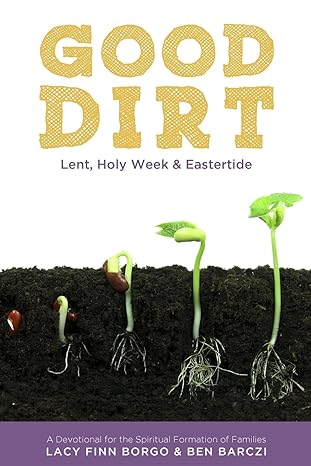
Good Dirt by Lacy Finn Borgo

1. Good Dirt: Lent, Holy Week & Eastertide

This is the BEST devotional I have found yet for kids during Easter. The devotional is very doable for each day (it’s about a half a page). The devotional covers Lent, Holy Week and Eastertide and is written from an evangelical perspective.

I really appreciate how each devotional is broken into four sections:

– Till (Prayer)

– Plant (Meditate on Scripture)

– Water (Reflect)

– Weed (Examine)

As you travel through lent, this is a great resource to serve as the foundational piece of your day.

Jesus Doll

2. Jesus Doll

My children LOVE this doll! They sleep with it every night and it serves as a tangible reminder that Jesus is always with them. One of my children told me, “I know I don’t have to be afraid (of the dark) because I hold my Jesus doll and remember that Jesus is in the room with me.”  This doll is perfect for a young-elementary child because it is not huge and will be easy to carry around.

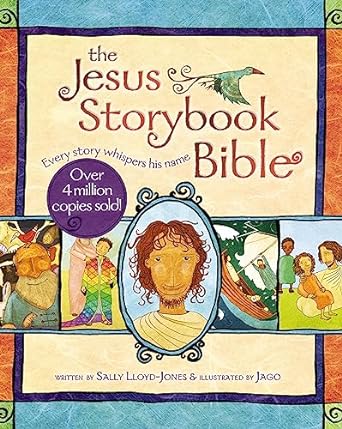
The Jesus Storybook Bible

3. The Jesus Storybook Bible

 This is a phenomenal paraphrased Bible for kids. The text is age appropriate, the illustrations are captivating, and the overarching story focuses on God’s never ending, never giving up, always and forever love for his kids.  I have read what feels like HUNDREDS of Bibles (okay, a little overdramatic here) and I haven’t found one yet that comes close.

4. A Picture of Jesus

This is huge!  When you place a special picture of Jesus with a child or a lamb in your child’s room it is a daily reminder that Jesus is always with them. It is also a huge reinforcement that Jesus is priority in the life of your family.  For years, we have asked our children, Who is that that lamb that Jesus is holding? And they shout out, that’s me!

5. The Boy And The Ocean

“God’s love is like the ocean, my little boy,” she said. “It’s always here. It’s always deep. It never ends. God’s love is special.”

Oh my word, hands down, probably my favorite Christian picture book. The illustrations are beautiful, the words are life-changing, and what an amazing book to pull out at bedtime.   The story draws parallels between Gods creation and his vast love for his children. I love how Max Lucado, portrays parents who include God in everyday life. Both boys and girls will love this book.

God's Great Love For You by Rick Warren

6. God's Great Love For You by Rick Warren

This book is all about Gods overwhelming love for his kids told in such an imaginative way. Written by Rick Warren, the book shows a young girl on different adventures discovering God lavish love. The illustrations are adorable and though the book can be read to girls and boys, the book is specifically geared towards young girls.

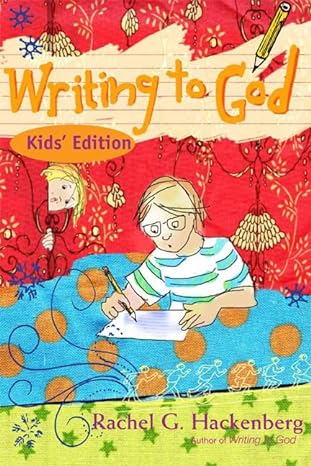
Writing To God Kids Edition

7. Journal - Writing To God: Kids Edition

This book is an amazing and creative resource full of journal prompts that guide children in learning how to talk to God.  This book has 35 different prayer journal exercises and it covers prayer topics on events that happen during the day, emotions, praise, thanks, pain, and using their five senses.  Your child comes to find out that you can speak to God about EVERYTHING, and has actually practiced doing just that throughout the book. Love it

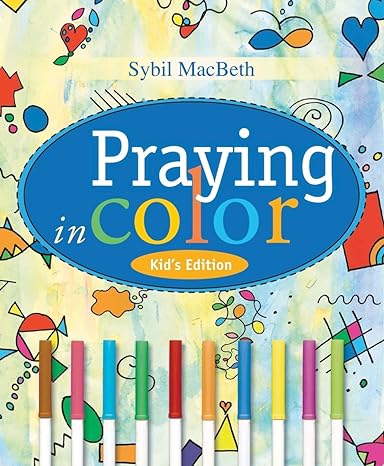
Praying in Color Kid's Edition

8. Journal - Praying in Color - Kid's Edition

Have you ever heard “But I don’t want to pray? I don’t know what to say? I’m embarrassed to pray out loud?” This is a revolutionary resource for children (and adults) who want to try another way to spend time with God.  The author, Sybil Macbeth gently leads children in understanding what prayer is, common prayer problems, how to pray, and step by step of how to pray using art. This has been an amazing resource for children and students who have felt inadequate or have had a hard time concentrating when it comes to prayer. Love it!

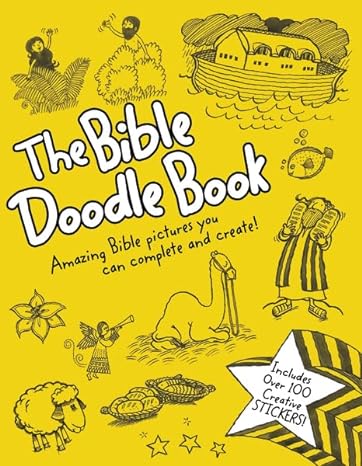
The Bible Doodle Book - Amazing Bible Pictures You Can Complete and Create!

9. Journal - The Bible Doodle Book

This doodle book has 100 unfinished drawings and stickers for children to complete.  I love it because the children can use the prompts to help them complete the drawings. You can use the drawings/prompts as a complement to your daily family devotions. A creative way to engage with the Bible!

Blank Journal

10. Journal

Choose a journal (with no lines) for your child to write or draw prayers that can be especially for this Lenten season.  After a lot of searching, the best journals seem to be found at your local craft store. Let me know if you find a great journal somewhere else!

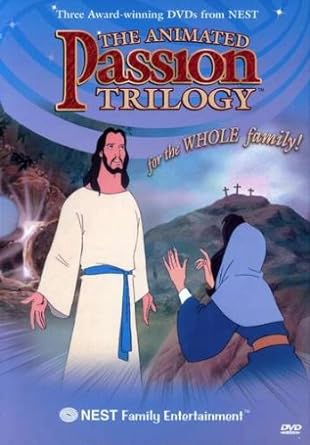
The Animated Passion Trilogy

11. DVD - The Animated Passion Trilogy

This is a great visual retelling of the Easter story for preschool-elementary age kids. Something about a video allows the children to really experience the life of Jesus in a whole new way.

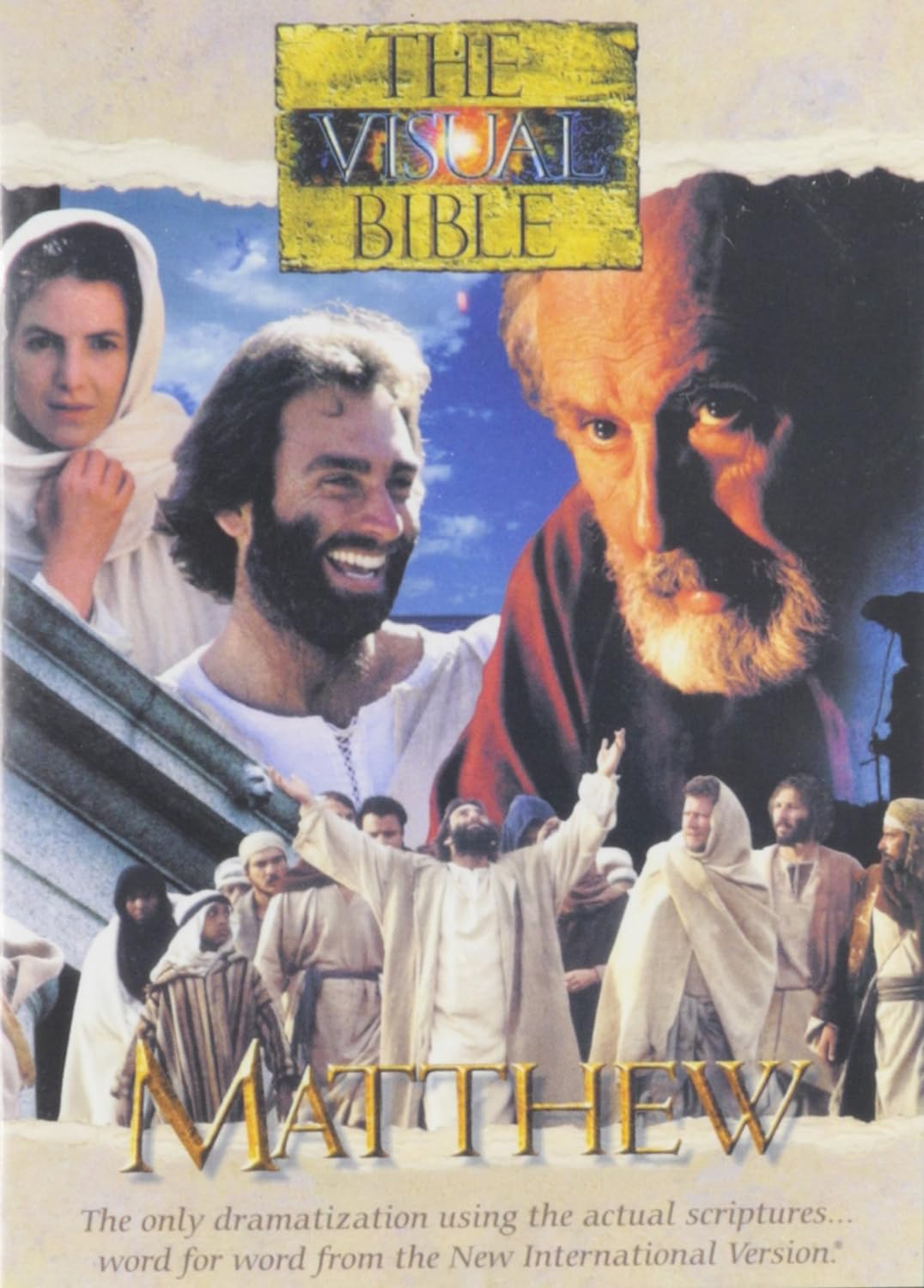
Matthew - Visual Bible

12. DVD - Matthew: Visual Bible DVD

This is a wonderful movie for older elementary children who are emotionally ready to watch the crucifixion and resurrection. It is not as graphic as the Messiah but I would still preview it ahead of time to make sure your kids are ready for it.

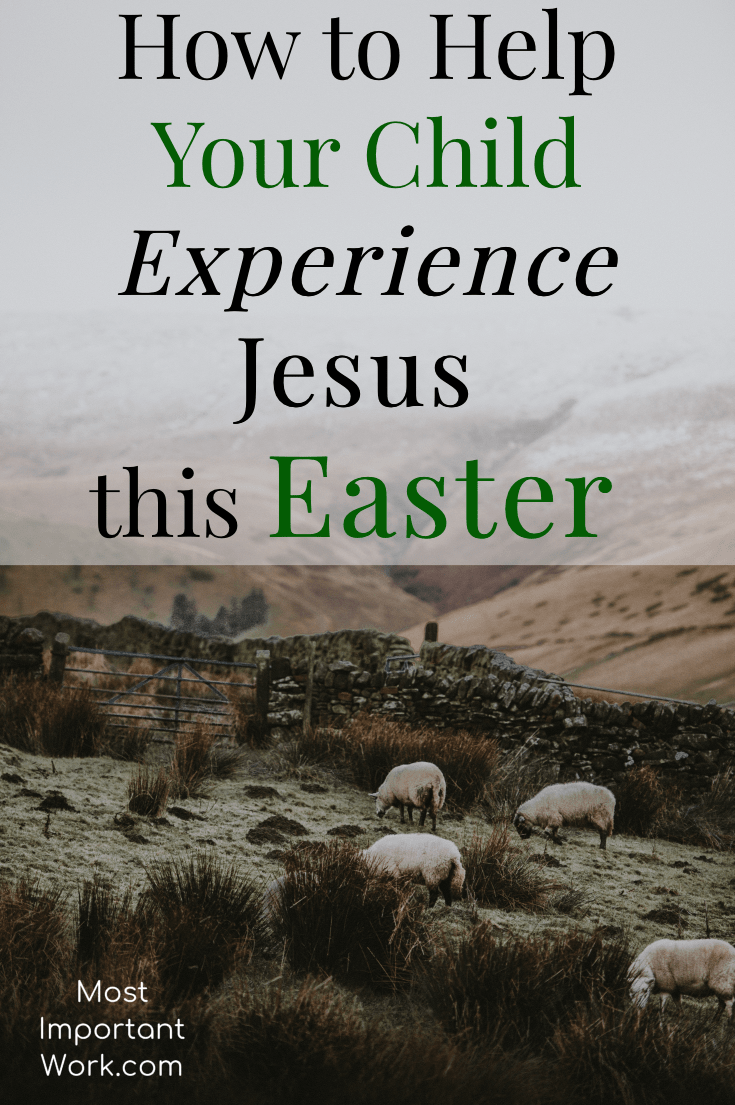
How to Help Your Child Experience Jesus this Easter

How to Help Your Child Experience Jesus this Easter


Reading Time: 5 min 31 sec

Have you ever had a year where you are so busy that one minute its Christmas and the next, it’s the Saturday before Easter and you are scrambling trying to cobble together outfits and stuff a million Easter eggs with chocolate bunnies?  


Do you wish that there was a way to really help your children understand that Easter is more than eggs, candy, with some Jesus thrown in?  ME TOO!


In our fast-paced society, it can be easy to pass over the importance of the lent season with nothing more than a thought or a good intention to stop eating chocolate.


But Lent is more than giving something up; it is a time of reflection, of preparing our hearts, of remembering Christ’s life, death and resurrection, and a concentrated time of refocusing on Jesus. A forty day (not including Sundays) fast, interwoven with prayer and giving that culminates on Easter Sunday.


We do not celebrate Lent or Easter as a way to earn more brownie points with God or as another task to complete. There is nothing we can do to make God love us any more or any less than he does right now.  We participate in Lent and Easter as a way to actively participate with the Holy Spirit in the transforming of our hearts.


I love how life as a follower of Jesus, is an ACTIVE, experiential life. We don’t just get to hear about God, we get to EXPERIENCE a relationship WITH God.  Children learn experientially, and active participation is formational in their spiritual growth. Lent and Easter is a time rich with experiences and a perfect way for children to actively engage in their faith.   


We are going to be talking about 13 meaningful experiences that you can have with your child as you learn to walk through this Easter season with intention. 


These are just suggestions. You do not need to do everything on the list but choose one or two activities that are speaking to you.   I pray that the Holy Spirit moves in the hearts of your family in powerful ways this Easter season.


  1. Art

  2. Devotional

  3. Drama

  4. Events

  5. Decorations

  6. Music

  7. Practices


A Couple of Tips: Your active participation with your child in the activity is HUGE. Do not to rush through these activities. It is not about getting them “done” and giving your child an Easter experience. This is not about being productive but about moving slowly, savoring, and giving the Holy Spirit elbow room to speak with your child. Allow for silence, (yes, this can work even with preschool children) in and around the activity.  

1.Use a Lent-Easter Family Devotional

 This is the BEST devotional, (Good Dirt Lent, Holy Week, Eastertide Devotional)  I have found yet for kids during Easter. The devotional is very doable for each day(it’s about a half a page).

 The devotional covers Lent, Holy Week and Eastertide and is written from an evangelical perspective. I really appreciate how each devotional is broken into four sections: Till (Prayer) Plant (Meditate on Scripture) Water (Reflect) Weed (Examine).  The book includes 14 weeks of devotionals.  You can grab your copy here!

2. Decorate Your Home

 Allow the decorations in your home to serve as a daily reminder of the importance of the Lenten season. The color purple serves as the traditional reminder of Easter. It symbolizes not only the pain of the cross but it is also the color of royalty, and it celebrates Jesus’s resurrection.  Decorate a table or space (or throughout the house) with the color purple, you could add a cross, a Bible and or a candle.  


3. Observe Ash Wednesday

Ash Wednesday serves as the start to the lenten season. It is important for your child to witness the community of God gathered together to worship him. Carving out time to attend serves speaks louder than words to your child about your family’s priorities.


4. Light a Candle 

 Every morning, start your day, by lighting a candle each day to as a reminder of Jesus’ shining light in the world. You can follow the lighting of the candle with prayer inviting him into your day.


5. Look at Art


Visit a church, or museum, in books, or print some pictures off the internet depicting the crucifixion and resurrection.  

 Start by inviting Jesus into this time. Find a piece that speaks to you or your child. Spend some time just enjoying the art.

Ask God what he is saying to you through this piece.  Remember, this is for you as much as it is for your child. It is powerful for your children to watch you engage with the Holy Spirit through art.


After a couple of minutes ask your child:

a) How does this piece make you feel?  

b.) What do you love about it?

c) What do you think the Father is saying to you through this piece?


Tip: Don’t rush. The goal is quality over quality. You are there to create elbow room for the Holy Spirit to speak to them through art. You are not there to teach your kids something (though they will learn). Also, don’t feel like you have to be there an hour to make it worthwhile.

6. Listen to an Easter Playlist

It is important to place a special emphasis on creating an environment that draws their hearts towards Jesus during this Lenten season.

Tip-I am loving the Lent and Easter Worship Songs Playlists by Salt of the Sound on Spotify


7. Act out the Easter Story

This can be as simple or elaborate as you desire. 🙂  This is great for allowing the children to really engage in the story of Easter. Remember this is not about getting it “right” but about engaging in the story of Jesus’ resurrection. 

Tip: Your children can also do this with stuffed animals or dolls.  


8. Draw Prayers to Jesus 

Layout art supplies, plain paper, and have your Easter playlist playing quietly in the background. Encourage your child to write or draw prayers to Jesus.

 Tip: This should not feel like a homework assignment. There is no correct way of doing this. This is their personal prayer to God. Let them know that they can but don’t have to share their prayers with you when they are done.

9. Watch a Video of the Easter Story


Here are two suggestions for younger and older children:

  1. Preschool-Elementary- The Animated Passion Trilogy
  2. Middle School-High School- Matthew:Visual Bible 

10. Use Playdough to Recreate the Empty Tomb

This is a GREAT, hands-on, simple activity to allow children to engage in the Easter story.


11. Draw or Paint an Easter Scene

Read through the story of Jesus’s death and resurrection. Encourage your children to draw or paint a picture of a scene from the Easter story that grabs their attention.  

Tip: I typically put on instrumental music in the background to help focus their attention on listening to Jesus.

12. Look for Ways to Serve Others

Pray with your children. And ask God what way he wants you to focus on serving others during this Lenten season. 

13. Attend a Good Friday and Easter Service

If appropriate allow your children to join you for all or part of the service. The death and resurrection of Jesus are foundational to our faith and allowing your child to witness that at a young age is HUGE!  Also, Easter sunrise services are amazing (especially for elementary age children).


14. Plan a Special Meal for Easter Sunday


The goal is to plan and prepare WITH your children a special meal celebrating Jesus’ resurrection. Invite over family and friends to celebrate.


Give your Easter season a strong foundation by grabbing your own copy of the Good Dirt: Lent, Holy Week & Eastertide Devotional. I am excited to travel through it with my own family this year!  You can get it here! 


What about you? What are your favorite ways to encourage a love of Jesus in your child during Easter? 

If you try any of these activities, let me know! Leave me a comment and don’t forget to follow Most Important Work on Pinterest!

[/et_pb_text][/et_pb_column][/et_pb_row][/et_pb_section]
5 Ways to Recognize the Voice of God When You Are Desperate

5 Ways to Recognize the Voice of God When You Are Desperate


Reading Time: 5 min 8 sec

Are you desperate to hear God’s voice? Do you have an issue that you desperately need wisdom on how to solve? Do you hunger to hear God’s voice for yourself?

You are not alone. We all struggle (even the great men and women of faith) with hearing God’s voice at different points in our relationship with him.


So, what’s going on? Is God playing some sort of game? Is he trying to make it difficult to have a conversation with him?  You ask, “If he truly loved me why can’t I hear his voice clearly?”


One of the reasons we might have a hard time hearing Gods voice is that we barely slow down long enough to hear our own voice. We have a problem and we want ANSWERS yesterday! We rush around bemoaning the fact that we can’t hear from God when we haven’t allowed him to get a word in edgewise. 


We are so busy moving, talking with others, and talking at God that no wonder we can’t hear his voice. We want a thunderbolt from heaven when he is talking in a still small whisper.  I love this reminder to slow down and be present with the one, who is ever present with us.


1 Kings 19:11-13, “And he said, “Go out and stand on the mount before the Lord.” And behold, the Lord passed by, and a great and strong wind tore the mountains and broke in pieces the rocks before the Lord, but the Lord was not in the wind. And after the wind an earthquake, but the Lord was not in the earthquake. And after the earthquake a fire, but the Lord was not in the fire. And after the fire the sound of a low whisper. And when Elijah heard it, he wrapped his face in his cloak and went out and stood at the entrance of the cave. And behold, there came a voice to him and said, “What are you doing here, Elijah?”


We are in a relationship with a God who is always talking. He loves us. Period. When you love someone with a never giving up, beyond comprehension love, you don’t hide from them, but delight in spending time with them.


 Jesus said it this way in John 15:15, “I no longer call you servants, because a servant does not know his master’s business. Instead, I have called you friends, for everything that I learned from my Father I have made known to you.”


So how do we hear from God?


We need to practice recognizing his voice. God lives life with us. He is always talking to us. And he is endlessly creative. God can and is speaking to us in a PLETHORA of ways we just need to become aware of his voice.  

Here are five basic ways to recognize his voice. They are to serve as guideposts to help you practice noticing God voice in your everyday life. This is just a starting place, as you come to know God in deeper ways, you will see that he is literally talking to you ALL the TIME and in a multitude of ways.    It’s awesome because you go about your ordinary life having an ongoing internal dialogue with God about EVERYTHING!


By taking the time to practice you are taking an active role in participating with the work of the Holy Spirit in your life.


Here are 5 basic ways to recognize his voice: 

  1. In the Quiet

2. Godly Council 

3. Intersecting Thoughts

4. The Word of God 

5. In Dreams


1. In the Quiet


I have found that in our fast-paced culture that the very act of carving out space to meet with God can feel like an uphill battle. We are a culture that focuses purely on doing, not the being.  


 Jesus modeled how we should come before God in Mark 1:35 “Very early in the morning, while it was still dark, Jesus got up, left the house and went off to a solitary place, where he prayed.” And in Luke 5:16, “Jesus often withdrew to lonely places and prayed.”.


Make it priority to spend time with Jesus in quiet. Just be with him in silence for 5-10 minutes (it’s more challenging than you think).  And then let him know what’s on your mind. You have to make spending time with Jesus a priority or it will never happen. 


2. Godly Council 

 We always want to jump to getting Godly council but I would encourage you to spend time with God on your own FIRST before you talk with others.  You will be more in tune with listening to the Holy Spirit and will be able to weigh the advice of others.  It’s a given but always make sure that any advice you receive lines up with Scripture.  I would also seek people that you know are pursuing a deep relationship with God.


3. Intersecting Thoughts


Have you ever been thinking along one path and all of a sudden you are shocked with some thought you know wasn’t from you (typically because it is super Godly :))?  I have had multiple situations over my life where I will be thinking about work, my children, or what to fix for dinner and all of a sudden, I will randomly have someone’s name come to mind.  I know that I wasn’t thinking about that person AT ALL, but I realize that God was trying to get my attention for a reason, and I immediately stop and pray for that person.  I have a number of times where I have had a chance to talk with that person later only to find out that they were going through a crisis at the very moment I was led to pray.  


*Always make sure that any intersecting thoughts line up with scripture.

  1. The Word of God

 The number one way you can hear from God is spending time in his word.  I love what Hebrews 4:12 says, “For the word of God is alive and active. Sharper than any double-edged sword, it penetrates even to dividing soul and spirit, joints and marrow; it judges the thoughts and attitudes of the heart.”

Do whatever it takes to sit with scripture, turning it over in your heart, and allowing it, by the power of the Holy Spirit to transform you

5. Dreams


Yes, God can speak to you through dreams. Sometimes, I think that is the only time we are still enough that he can get our attention. 🙂   I love how God spoke to many people through dreams throughout the Bible. I have had a number of people close to me hear God through dreams.


If you have a dream that you think might be from God, I would first, write it down. Second, make sure it lines up with scripture. Third, I would spend a period of time just praying about it. Fourth, I would ask God if this is something for right now or something for the future.   I have had a couple of close friends experience dreams where God didn’t reveal the interpretation until fifteen years later. 


Remember, this is just the starting point. God can speak through worship, nature, art, angelic appearances, books, physical activity, music etc. As you grow deeper in your relationship with God you will come to hear in his still soft voice in a multitude of ways. This is just just the beginning!  


If you want to know how to get started in living a deeper life with God; grab your free Deeper Life Beginners Guide (get it below). And join our community of moms who are hungry for more of Jesus in their lives and in the lives of their families. 


What about you? What is your #1 issue when it comes to hearing God’s voice? Feel free to leave me a comment and don’t forget to follow Most Important Work on Pinterest!

[/et_pb_text][/et_pb_column][/et_pb_row][/et_pb_section]
Skip to content